• We kindly request chatzozo forum members to follow forum rules to avoid getting a temporary suspension. Do not use non-English languages in the International Sex Chat Discussion section. This section is mainly created for everyone who uses English as their communication language.

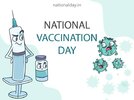
National Vaccination Day - 16th March - India

Deepak Kiran

Paw Patrol of ZoZo
Posting Freak
On 16 March every year, National Vaccination Day is observed in India which is also known as National Immunisation Day (IMD). It was first observed on 16 March 1995 when the first dose of Oral Polio Vaccine was given. It is an attempt to increase awareness for the eradication of polio from the planet earth.


Each year March 16 is observed as National Vaccination Day to mark the significance of vaccination and its role in public health. After experiencing the deadly pandemic of coronavirus, the world now, more than ever needs awareness about vaccination and its benefits. To help create that, on National Vaccination Day, several organizations and people send messages on how vaccination or immunization is the most effective way of preventing highly infectious diseases.
images - 2022-03-16T083733.226.jpeg

National Vaccination Day also marks India’s victory against Polio disease. Notably, the impact of vaccination is not only limited to improving health or life expectancy, it also has a social or economic impact at the community and the National level.
 
Last edited:

Immunisation​

UNIVERSAL IMMUNIZATION PROGRAMME
  • Immunization Programme is one of the key interventions for protection of children from life threatening conditions, which are preventable. It is one of the largest immunization programme in the world and a major public health intervention in the country.
  • Immunization Programme in India was introduced in 1978 as Expanded Programme of Immunization (EPI)
  • The programme gained momentum in 1985 and was expanded as Universal Immunization Programme (UIP) to be implemented in phased manner to cover all districts in the country by 1989-90.
  • UIP become a part of Child Survival and Safe Motherhood Programme in 1992 Since, 1997, immunization activities have been an important component of National Reproductive and Child Health Programme and is currently one of the key areas under National Rural Health Mission (NRHM) since 2005
  • Under the Universal Immunization Programme, Government of India is providing vaccination to prevent seven vaccine preventable diseases i.e.
    • Diphtheria, Pertussis, Tetanus, Polio, Measles, severe form of Childhood Tuberculosis and Hepatitis B, Hiaemophilus influenza type b (Hib) and Diarrhea


The Vaccination Schedule under the UIP


National Immunization Schedule
VaccineWhen to giveDoseRouteSite
For Infants
BCGAt birth or as early as possible till one year of age0.1ml (0.05ml until 1 month of age)Intra -dermalLeft Upper Arm
Hepatitis B Birth doseAt birth or as early as possible within 24 hours0.5 mlIntramuscularAnterolateral side of mid thigh-LEFT
OPV Birth doseAt birth or as early as possible within the first 15 days2 dropsOral-
OPV 1,2 & 3At 6 weeks, 10 weeks & 14 weeks2 dropsOral-
IPV (inactivated Polio Vaccine)14 weeks0.5 mlIntramuscularAnterolateral side of mid thigh-RIGHT
Pentavelant 1,2 & 3At 6 weeks, 10 weeks & 14 weeks0.5 mlIntramuscularAnterolateral side of mid thigh-LEFT
Rota Virus VaccineAt 6 weeks, 10 weeks & 14 weeks5 dropsOral-
Measles 1st Dose9 completed months-12 months. (give up to 5 years if not received at 9-12 months age)0.5 mlSubcutaneousRight Upper Arm
Vitamin A, 1st DoseAt 9 months with measles1 ml (1 lakh IU)Oral-
For children
DPT 1st booster16-24 months0.5 mlIntramuscularAnterolateral side of mid thigh-LEFT
OPV Booster16-24 months2 dropsOral
Measles 2nd dose16-24 Months0.5 mlSubcutaneousRight Upper Arm
Vitamin A (2nd to 9th dose)16 months with DPT/OPV booster, then, one dose every 6 month up to the age of 5 years)2 ml (2 lakh IU)Oral-
DPT 2nd Booster5-6 years0.5 ml.IntramuscularLeft Upper Arm
TT10 years & 16 years0.5 mlIntramuscularUpper Arm
 
Top